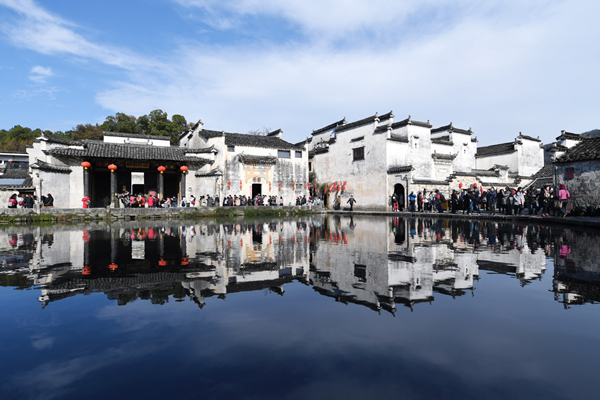
Ancient Villages in southern Anhui - Xidi and Hongcun
Introduction
The ancient villages of Xidi and Hongcun, located in Yi county, Huangshan city, in the southern Anhui province of China, are recognized for their historical and artistic significance. These villages exemplify traditional architectural complexes that have maintained the essential features of Anhui villages from the 14th to the 20th centuries, leading to their designation as a UNESCO World Cultural Heritage Site in 2000.
Situated south of the Yangtze River, these villages symbolize the rich cultural heritage of southern Anhui. They feature a variety of architectural styles, layouts, and decorative elements that offer insights into the past, showcasing the traditional Chinese village structure, including commercial economies and clan-based social structures typical of the time. The preservation of these elements makes Xidi and Hongcun valuable resources for those interested in exploring traditional village culture and the historical development of rural China.
The architectural style of Xidi and Hongcun harmoniously integrates with the surrounding natural landscape. Xidi comprises over 300 residential buildings primarily dating back to the Ming (1368-1644) and Qing (1644-1911) dynasties. The village's aesthetics include black and white residential buildings adorned with decorations reflecting the stylistic elements of these dynasties. Xidi is also known for its collections of calligraphy and handicrafts, along with a variety of potted plants and water features that contribute to a serene and culturally rich environment.
Hongcun is distinguished by its unique ox-shaped layout, centered around its principal street connecting the South Lake and the Moon Pond. The village's tranquil setting is enhanced by the presence of the ancient Academy of the South Lake (Nanhu Shuyuan), along with nearby ancient trees and graceful structures that cast reflections in the lake, enhancing the village's serene atmosphere.
Historical Background
The history of Xidi and Hongcun is deeply rooted in the broader historical context of Yi county, dating back to the Qin Dynasty (221-206 BC). This region has experienced a long period of peace spanning over two millennia, allowing it to preserve its original cultural and natural beauty. Once known as the "source of the plum-blossoms" or Tao Hua Yuan—a term used in Chinese literature to describe a secluded paradise—this area has been celebrated by poets like the great Tang Dynasty (618-907) poet Li Bai.
The inhabitants of these villages, originally from the State of Yue, are recognized for their independence and respect for cultural traditions. The preservation of these villages over the centuries is a testament to their inhabitants' dedication to maintaining their ancestral heritage. Approximately 3,000 buildings from the Ming and Qing dynasties remain intact, showcasing detailed domestic decorations reflecting China's time-honored civilization.
The transformation and development of Xidi and Hongcun over the past thousand years have been marked by their commitment to authentically preserving the character of traditional Chinese villages. This includes maintaining elements typical of pre-modern village life, such as the surrounding environment, manmade waterways, village layout, architectural style, decorative arts, construction methods, and materials. These villages also preserve regional art, customs, cuisine, and other cultural traditions, making them valuable sites for contemporary society to explore and understand historical village culture.
Architecture and Layout
The architecture of Xidi and Hongcun exemplifies traditional Chinese craftsmanship, reflecting the Huizhou architectural style native to southern Anhui. These structures are typically divided into three parts, creating a unified and neat appearance that is both flexible and lively. The symmetrical construction features main halls in the center, flanked by side halls, with indoor skylights near the entrance for lighting and ventilation.
The roofs of these rural buildings often resemble upturned half-opened books, with raised beams or gable roofs. The black tiles covering the exterior walls are decorated with rippling or curling patterns, punctuated by small yet intricately designed windows. The main entrances are framed with local stone or brick, featuring richly decorated door casings.
Family gardens in these villages are usually located at the front of courtyards, though some are positioned beside or behind the buildings. Despite their small size, these gardens are creatively designed to embody a profound poetic quality, often featuring hollow windows, doors, screens, flowers, or plants that create a refreshing and intricate spatial experience.
The traditional craftsmanship of these buildings involves the use of wooden frames, with materials such as wood, soil, brick, tile, and stone. Skilled Chinese craftsmen have developed unique techniques over thousands of years, mastering methods for selecting materials, determining construction procedures, and connecting components with flexible, earthquake-resistant tenon joints. These practices reflect an inherited understanding of nature and community relationships in traditional Chinese society.
Cultural Significance
Xidi and Hongcun hold cultural significance as they preserve an authentic representation of traditional village life and architecture in southern Anhui. These villages provide insights into the socio-economic and cultural patterns of rural China during the Ming and Qing dynasties. The architectural details, such as stone, wood, and brick carvings, serve not only as decorative elements but also as educational tools, conveying historical stories and auspicious symbols to residents and visitors alike.
The villages' layout and structures reflect the importance of clan-based social systems in ancient Chinese society. Ancestral halls, central to public life in these communities, remain integral to understanding the social and cultural dynamics of the time. These halls, along with the intricately carved paifang (memorial arches), tell the stories of the individuals and families who contributed to the villages' legacy.
Folk customs and traditions are still alive in Xidi and Hongcun, offering glimpses into the lives of ancient Huizhou people. These customs, adapted to the tourism industry, demonstrate the villages' ability to merge intangible cultural heritage with tangible historical assets.
Tourism and Preservation
The recognition of Xidi and Hongcun as UNESCO World Heritage Sites has played a crucial role in their preservation and development as tourist destinations. The influx of visitors has brought economic benefits to the local community, enabling the restoration and maintenance of these historical sites. Tourism has also led to an increased awareness of the importance of preserving cultural heritage among residents and visitors alike.
Local residents have played a significant role in preserving the historical and architectural integrity of Xidi and Hongcun. Their efforts to maintain traditional structures, while accommodating modern tourism, have ensured that these villages continue to thrive as living museums of Chinese cultural history.
The development of tourism in Xidi and Hongcun has also encouraged young entrepreneurs to return to the villages, bringing fresh ideas and business opportunities that have revitalized the local economy. This blending of traditional culture with modern enterprise illustrates the potential for sustainable development in rural areas, providing a model for other regions seeking to preserve their cultural heritage while fostering economic growth.
Overall, Xidi and Hongcun represent a synthesis of history, culture, and natural beauty, offering visitors a unique opportunity to experience the enduring legacy of traditional Chinese village life.








